No Such Number
A county switchboard closed eleven years ago, yet one line is still recopied into the register every day. Find out why it was never signed off.
A county switchboard closed eleven years ago, yet one line is still recopied into the register every day. Find out why it was never signed off.
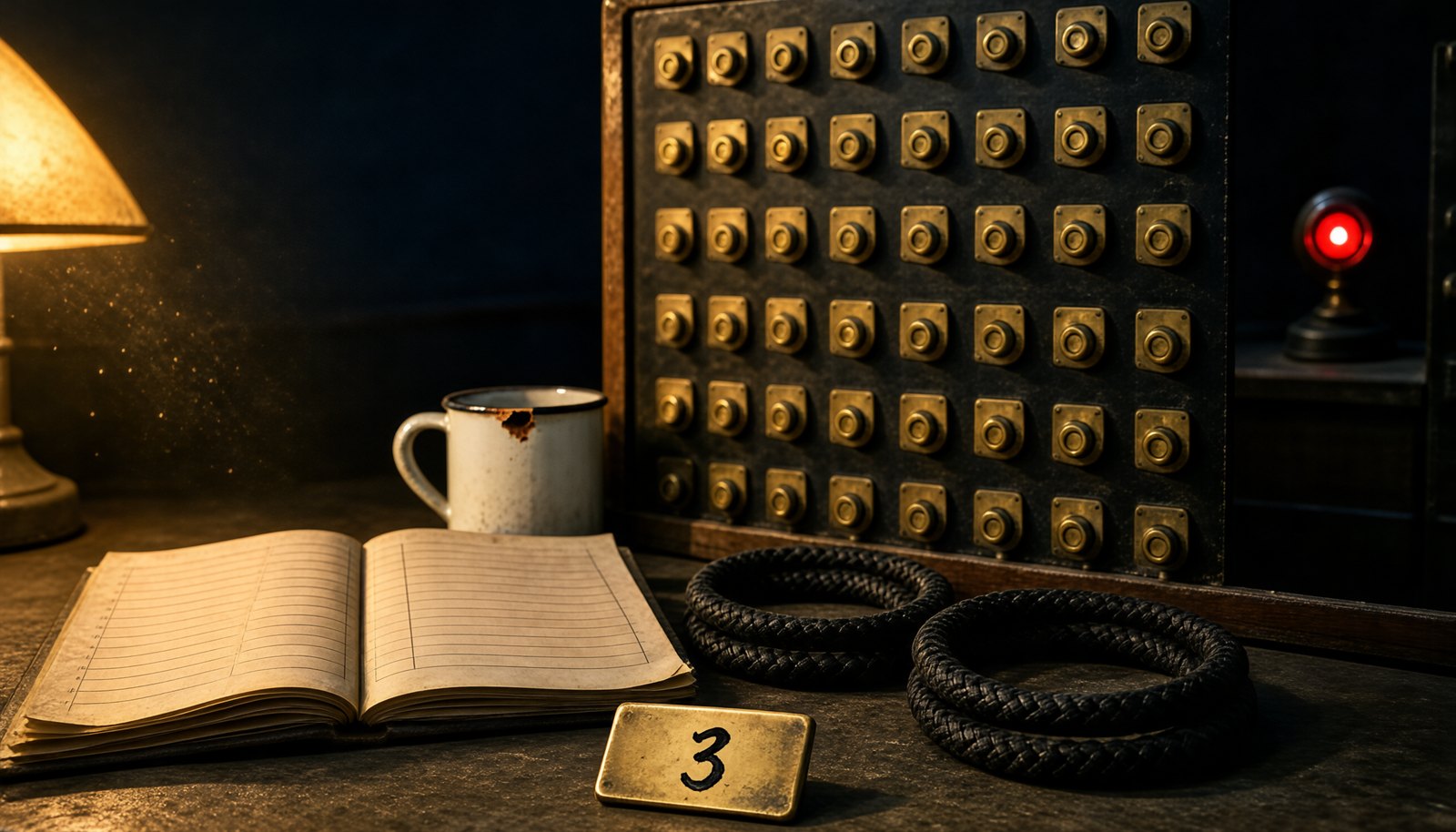
Yuguan County Post & Telegraph had a 48-line manual switchboard, installed in 1998. At 21:50 each night the operator on duty logged the evening’s booked calls in the long-distance register, stamped them CONNECTED or NO SUCH NUMBER, and signed. On 6 November 2015 the lines were cut over and the switchboard closed; the site remained as an archive. Only one thing is wrong: since that day, the line at position 3 has been recopied into each day’s register for 4,018 days in a row, stamped neither one thing nor the other. You come back to find out why that square is still blank. Every original you pull darkens another part of the site for good, and takes another name with it.
Released 2026-11-06 · Version 1.0.0 · Updated 2026-11-06

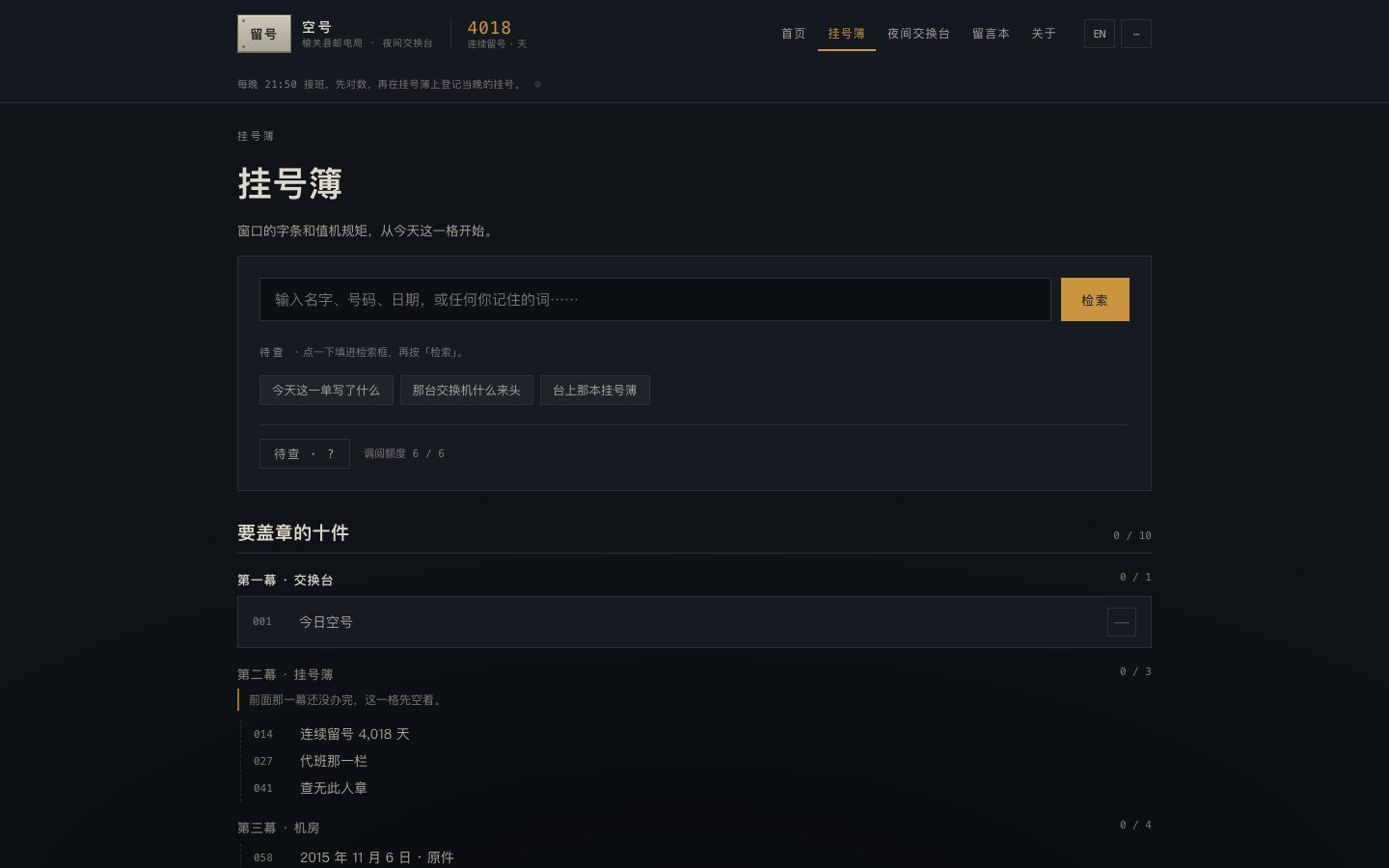
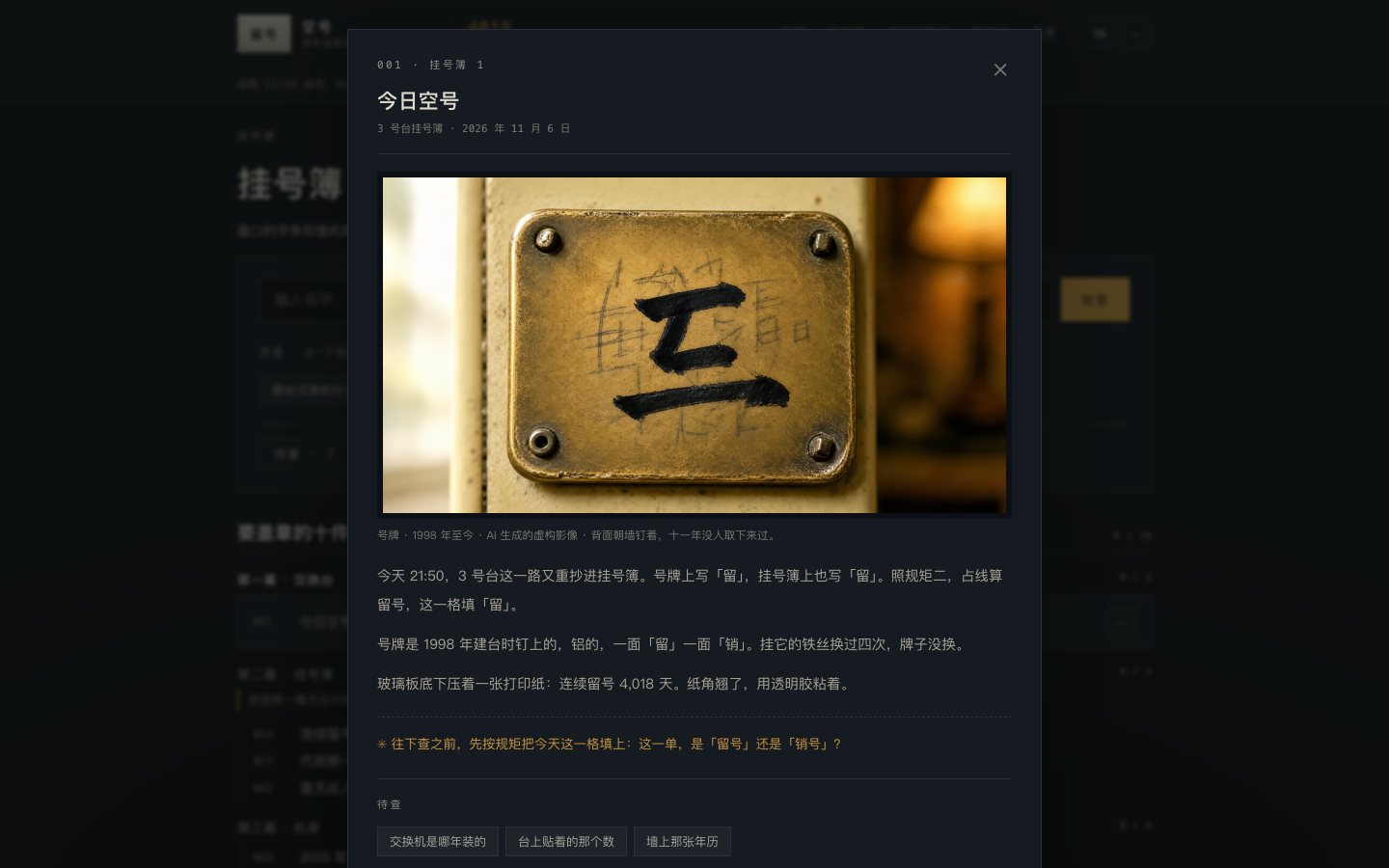
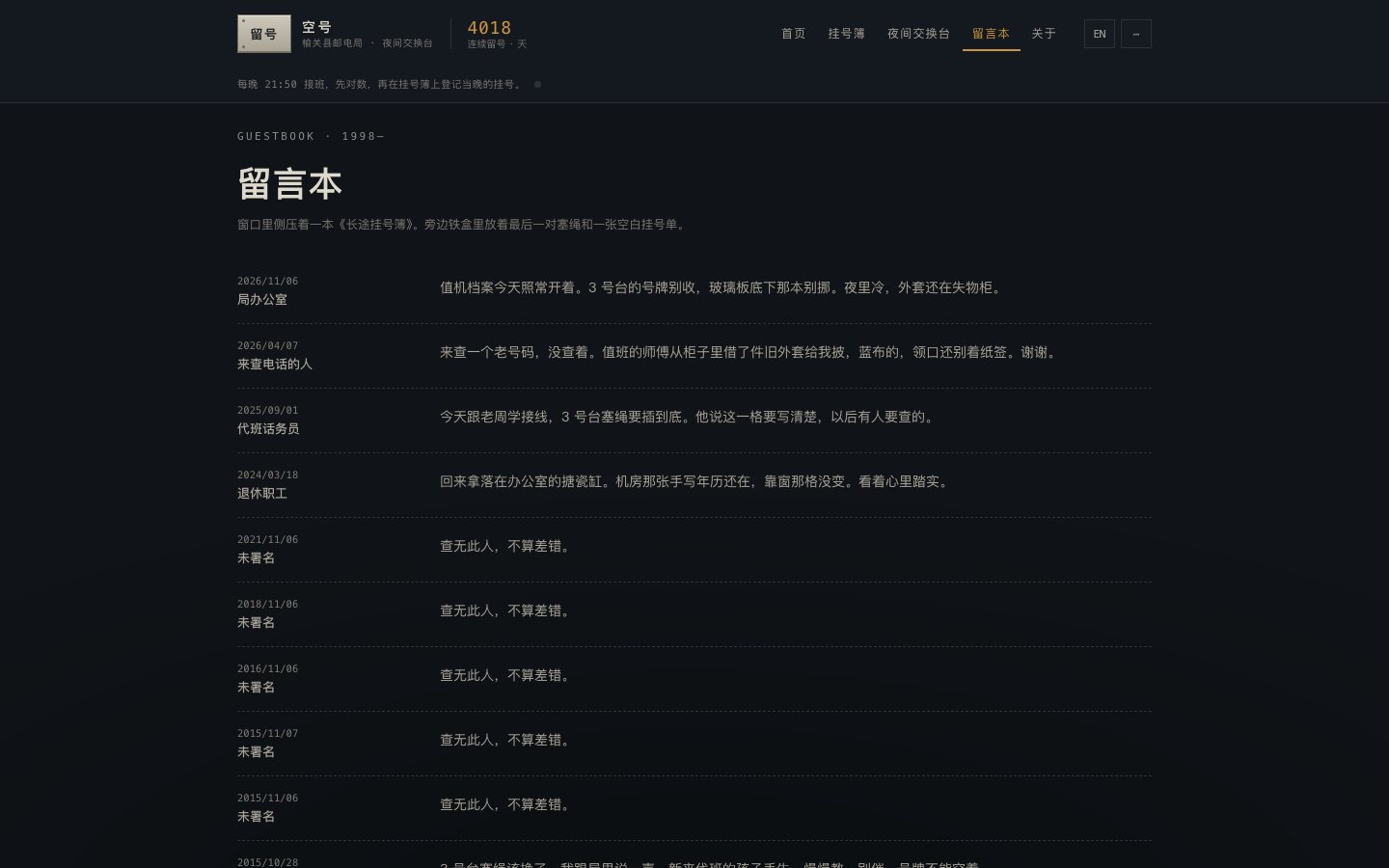
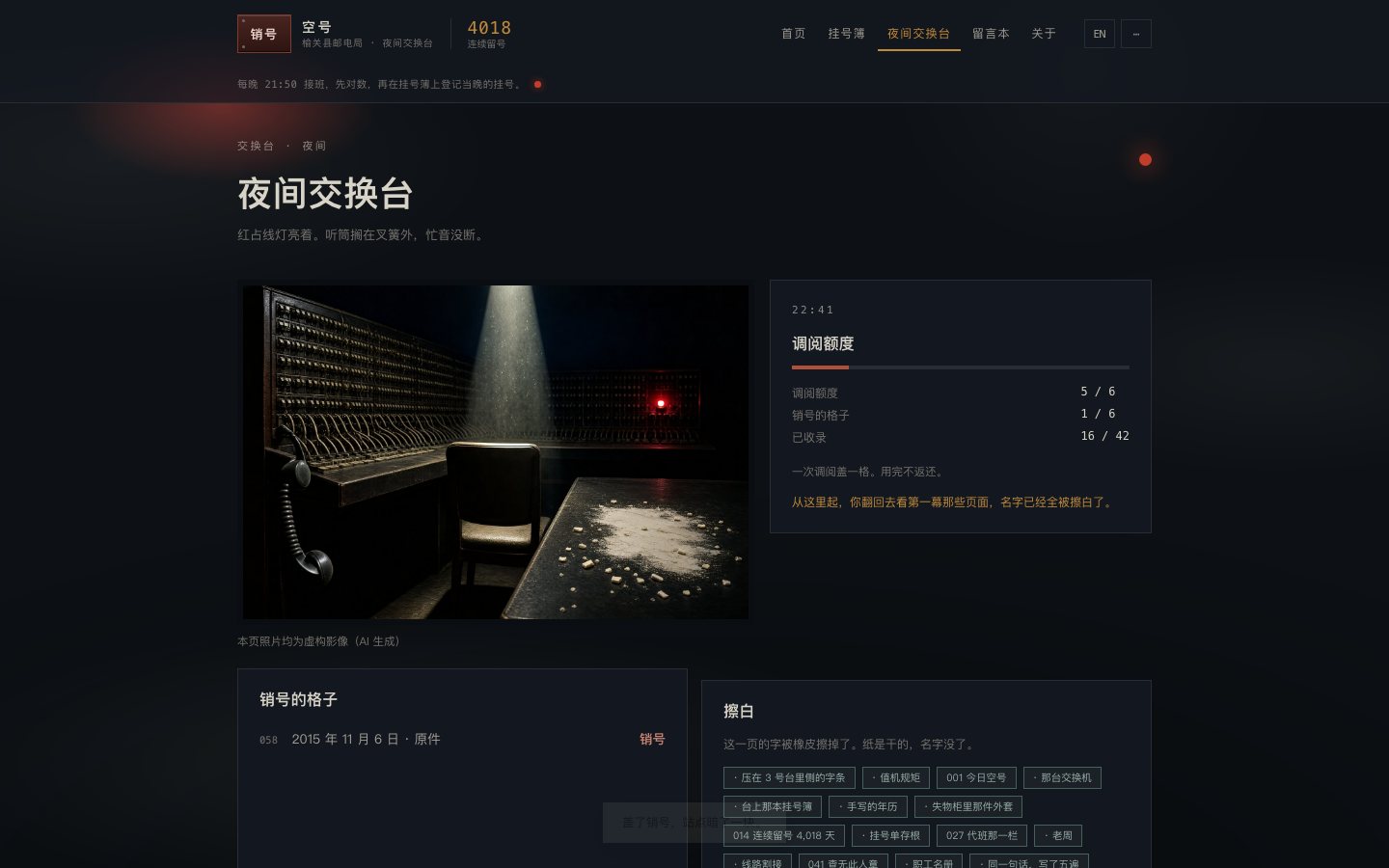
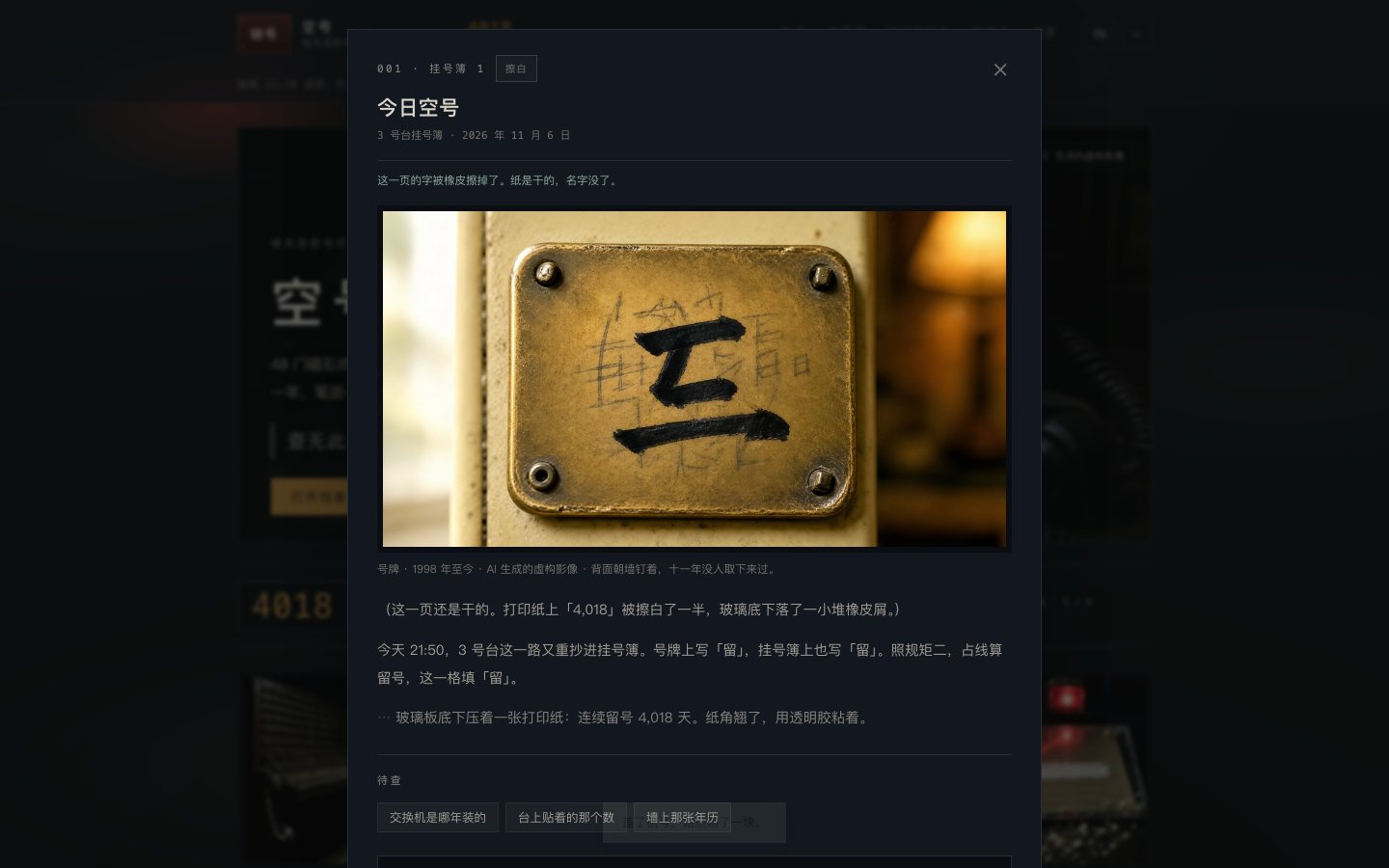
The container is not a dungeon or a spaceship. It is the website of a county post office’s night switchboard: duty rules, handwritten long-distance registers, the brass number plates of a 48-line board, a rota pinned under glass, a guestbook, a lost-property cupboard, a 1998 staff photograph. The first two acts are warm throughout — a wall calendar, a note left by someone covering a shift, a child’s drawing, an enamel mug.
The question is small: the switchboard closed in 2015, so why does this register still gain one new line every day, in the same hand? Following it leads to a call slip stamped NO SUCH NUMBER, a name rubbed out with an eraser, a register recopied year after year, and a line scored into the back of a brass plate in 1998.
No Such Number stands alone. Its people, its department and its number book belong to this switchboard and nowhere else: none of them appear in our other titles, and nothing here assumes you have played them.
The first two acts are the switchboard with the lamp still on: grey panels, amber light, monospace type. The first time you pull an original in Act Three, the whole site cuts — one frame of pure black, then the desk lamp goes out one notch at a time: amber to dark red, panels to black, until a single cold red busy lamp is left, a handset lying off its hook, a small drift of eraser crumbs on the desk. No fade, no warning, no way back.
Each further pull darkens another part of it for good, across seven levels. Go back to the lit pages of Act One afterwards and they are not wet: the paper is dry, and the names have been erased. Record cards switch to the erased text written for that same record, and the home page, guestbook and photographs all switch to the same objects after someone rubbed them out. These are not a second set of illustrations. They are the same things, with the writing gone.
That is the point of the game. The lamplight was never a backdrop. Somebody spent eleven years writing those names back in, a line at a time. You are the one rubbing them out.
Act One puts seven documents on the desk: the note under the glass at position three, the duty rules, the specification of the 48-line board, the register kept on the desk, the hand-copied wall calendar, the coat in the lost-property cupboard, and case No. 001 itself. Read them, then type whatever you remember into the search box — a name, a date, an object or a number will match. A "to look up" chip under each card fills the word for you, and three tiers of hints sit behind it. There is no account to make and nothing to install.
Each case ends with a choice between KEEP and CUT. The plate has only two faces (rule two: engaged counts as keep, no answer counts as cut), and the right face comes from evidence rather than a moral judgement. A wrong face gives a line of reply and can be tried again; nothing is taken away. Four squares in the first two acts are KEEP, six in the last two are CUT.
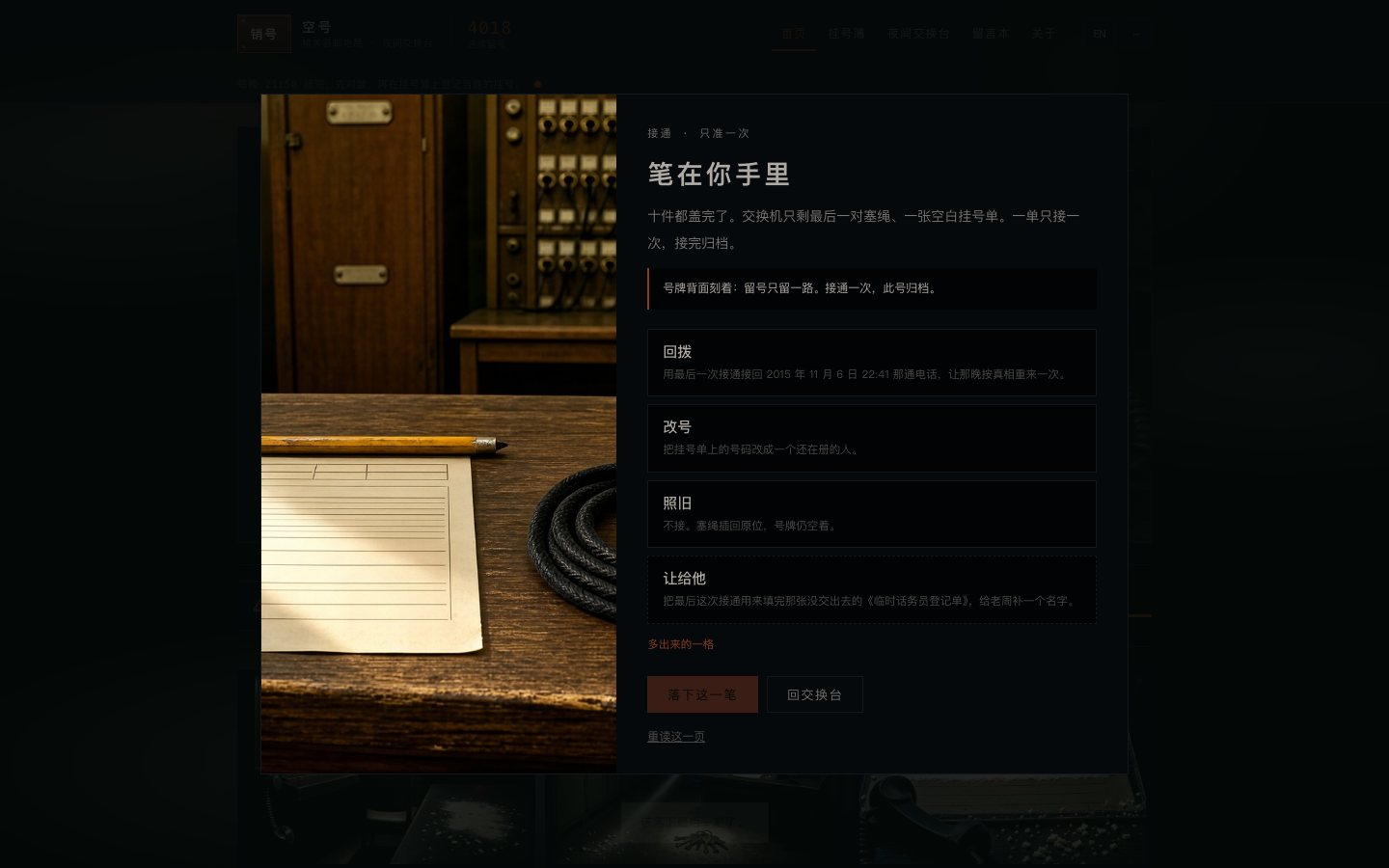
There are six pulls, exactly matching the six CUT squares. They are not returned, but running out cannot dead-end the game. After all ten comes the signing: one last pair of cords, one blank call slip, four choices.
Low on the back of the plate, a line was scored with a knife in 1998: "Keep one line. One connection, then the number is archived." Rule seven ("the plate must never be left blank") and rule three ("no square may be left blank") came from the same hand. There is one unused pair of cords left on the board and one blank page at the end of the register — nobody granted you a chance; that is simply all the stock there is.
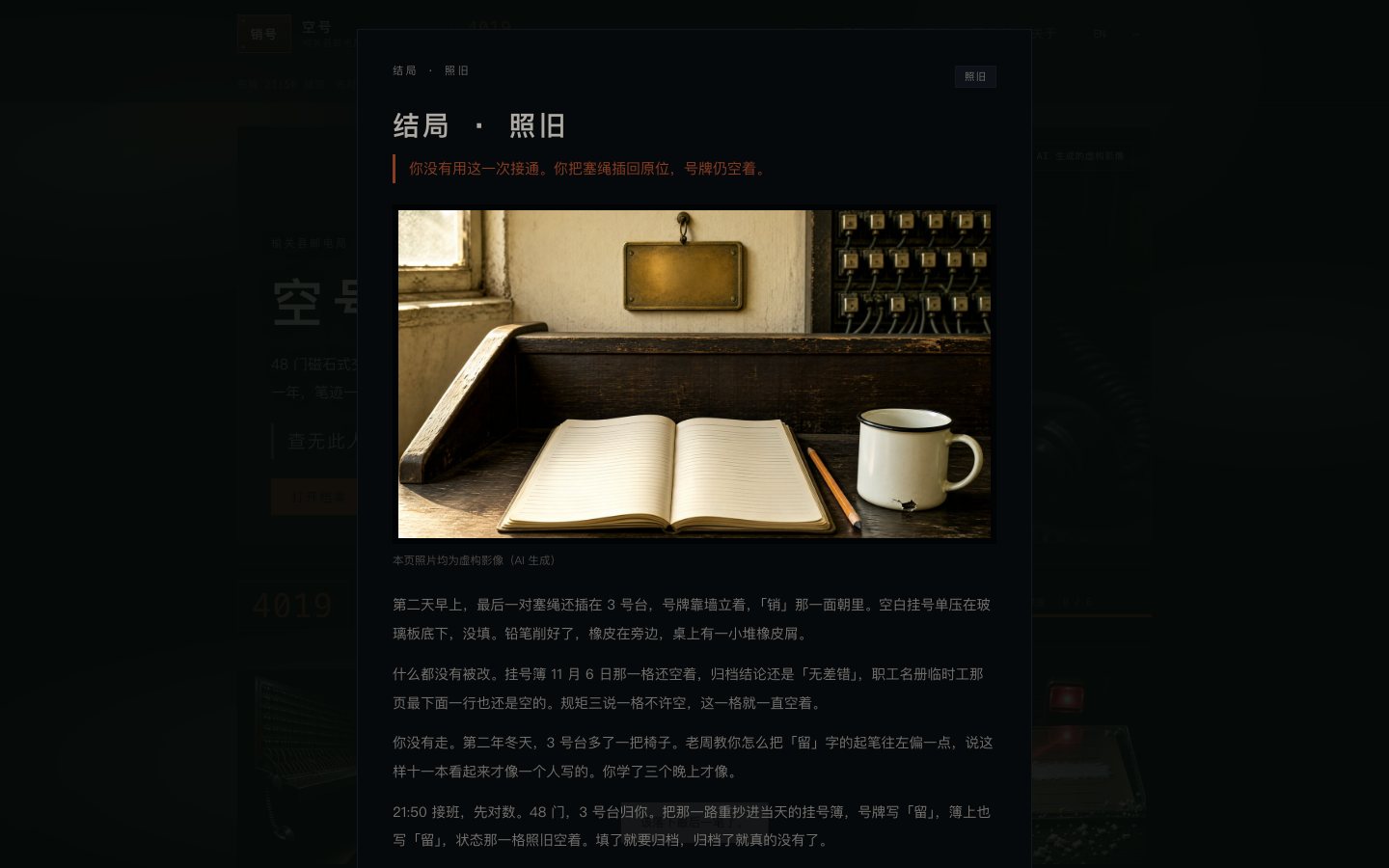
The four endings — rewind, change the number, keep things as they were, and a hidden option that only appears if you find a temporary-operator registration form that was never handed in — are four ways of spending that one connection, and all four cost something. The game does not say which is the good one, and this page reveals none of their text.
The 42 records, the 10 cases (4 KEEP, 6 CUT), the 1·3·4·2 spread across four acts, the 6 pulls, the 4 endings and the 19 photographs are each counted out of no-such-number/src/data/. The streak of 4,018 is 11 × 365 + 3 leap days (2016, 2020, 2024), from 6 November 2015 to 6 November 2026. The outage at 22:41, the 47 minutes without power and staff no. 1128 can each be found in the night log, the machine-room note and the staff register.
To check them yourself, read the ten cases in order: each square gives the reason for its own face on the page, so nothing has to be guessed. The 4,018 turns up three times — on the printed sheet on the wall, in the row upon row of KEEP marks in the registers, and in the date scored on the back of the plate — and all three agree. Once all ten are filed, the register and the back of the plate corroborate each other.
All people, the institution, its address and the events here are fiction, unrelated to any real post office, institution or person. The 19 images inside the game are AI-generated fiction, not captures of gameplay. The eight screenshots on this page were taken from a running build, and the two kinds are labelled separately rather than blended together.
The game contains mild unsettling atmosphere: late night, a busy tone, eraser crumbs, names rubbed away, one red busy-line lamp. There are no jump scares, no gore, and nothing that requires sign-in, payment or a rewarded ad. Progress lives in localStorage on this device only.
Is there anything to install or register for?
No. The duty room is the web page itself. Progress is written to the browser you play in, and the game never asks for a name, an e-mail address or a phone number.
Does this page carry advertising?
The sub-domain loads the same Google AdSense script our home site does. Nothing pops up, nothing pays you to watch an ad, and there is nothing to buy.
How much of the answer is on this page?
The shape, not the solution: where it is set, how the desk works, the figures you can verify yourself, and what kind each of the four endings is. Which face a square belongs on, and any text from the endings, stay off this page.
Can I play it on a phone?
Yes. Narrow screens reflow into a single column, and reading, searching, turning the plate over and signing the slip are all reachable by touch.
What happens if I close the tab mid-shift?
Nothing is lost: the save lives on that device. Clear the browser data or change machine and the shift starts over, because no copy is kept on a server.
Is the English version complete?
Yes. All 42 records carry English body text, not only the interface. Open /en/ to work the night desk in English.
Where do I look when a search returns nothing?
In the deep dives: a complete walkthrough for this game lists, case by case, the term to search and the face the plate should get, in Chinese and in English.
Take the night shift — Runs on its own subdomain · no timer · progress stays on this device
Since the first version on 2026-11-06, this page records what changed in each version of this game.