更正启事 ERRATA
《更正启事》是本站的第一方排版裁决 ARG:1994 年六个孩子下水、报纸只写了五个;2026 年你被雇来给旧报改错字。7 幕、24 页、22 题、412 条待校记录、2 个结局,核心动作是点掉一个字,不是搜索。
《更正启事》是本站的第一方排版裁决 ARG:1994 年六个孩子下水、报纸只写了五个;2026 年你被雇来给旧报改错字。7 幕、24 页、22 题、412 条待校记录、2 个结局,核心动作是点掉一个字,不是搜索。
July 1994, Qingshan Reservoir in Xiuxian County: six children went into the water, the newspaper printed five. In 2026 you are hired by a 60-yuan-a-day remote proofreading job for a newspaper digitisation project. There is one rule: fix only typos, never the content.
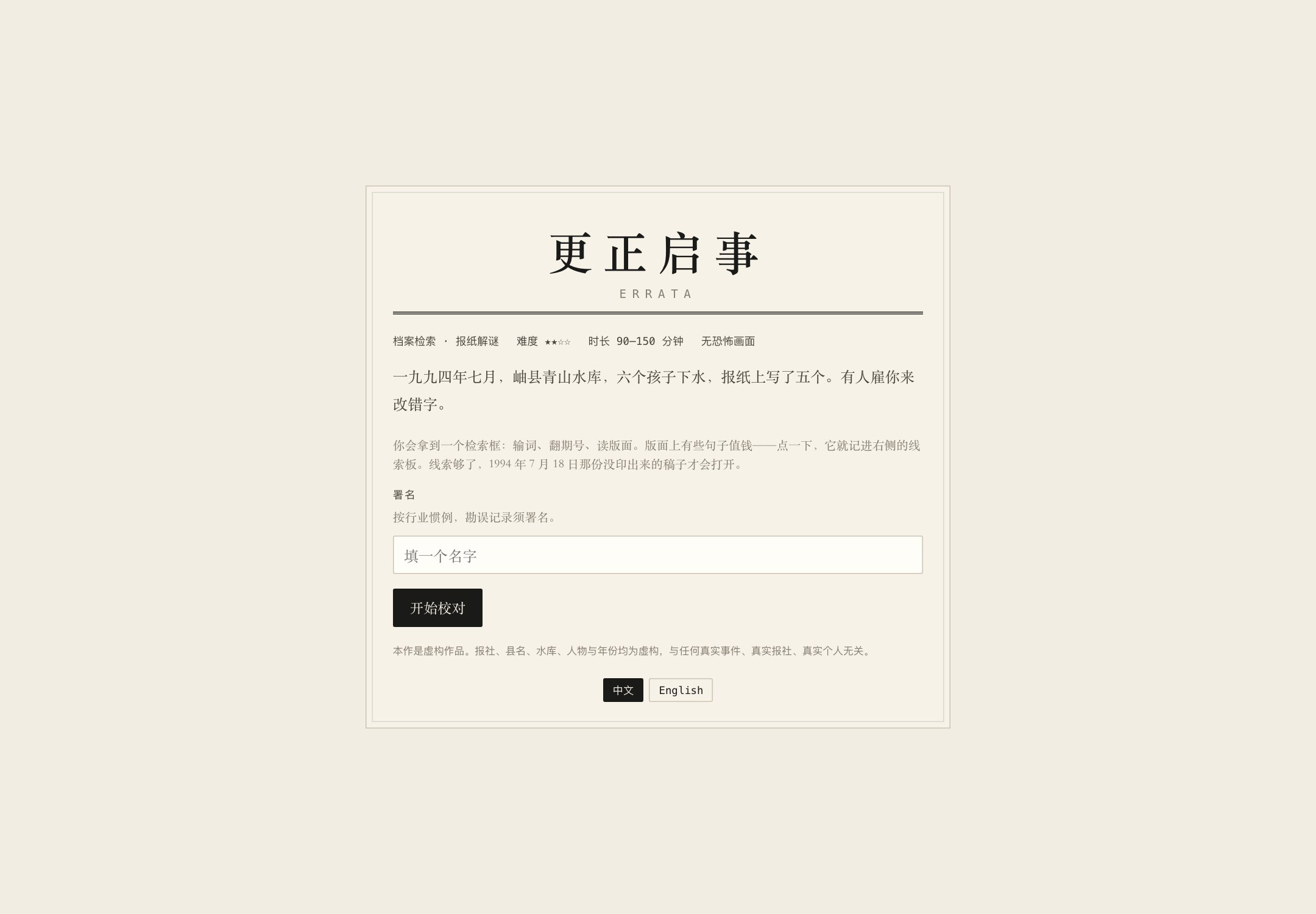
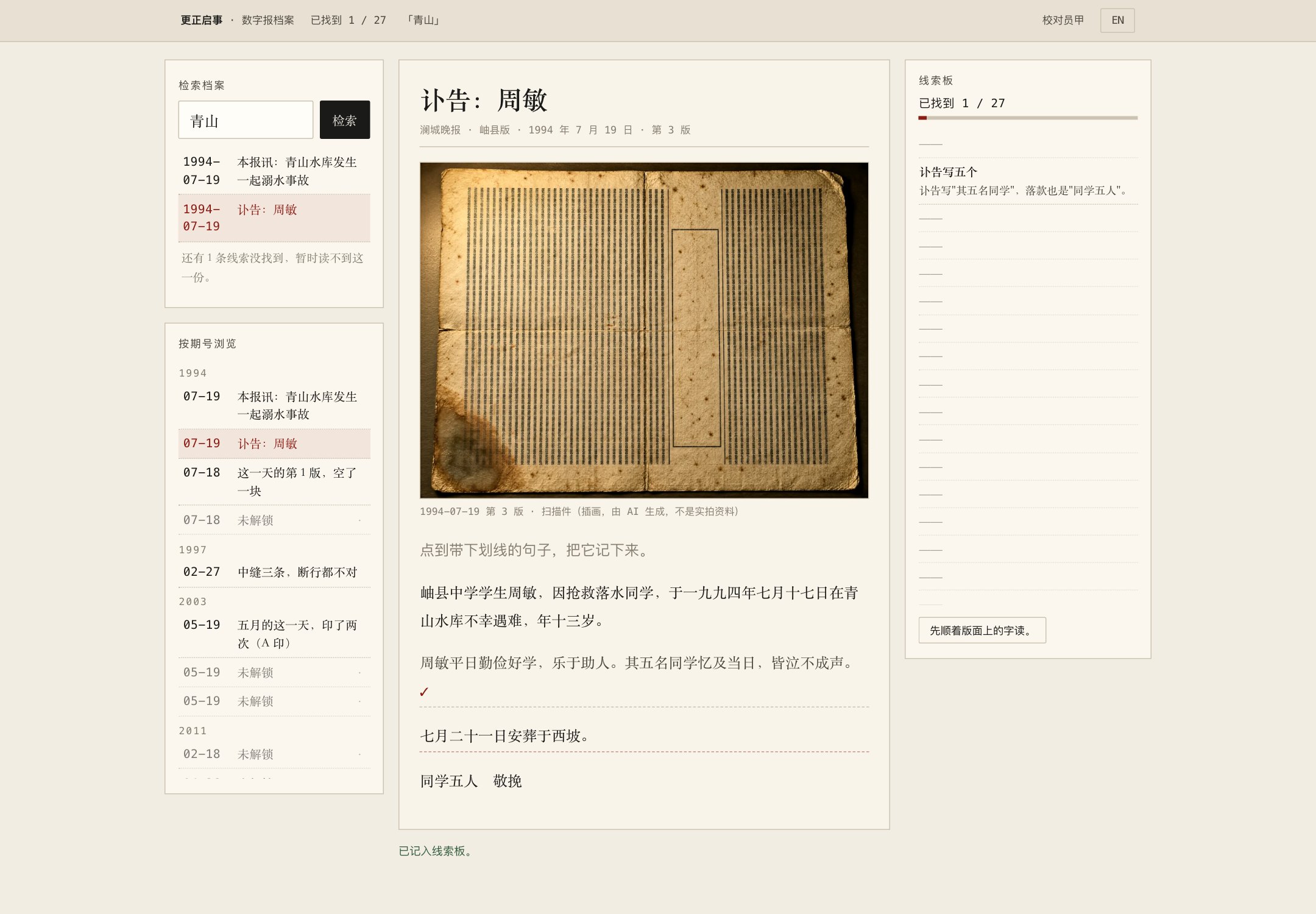
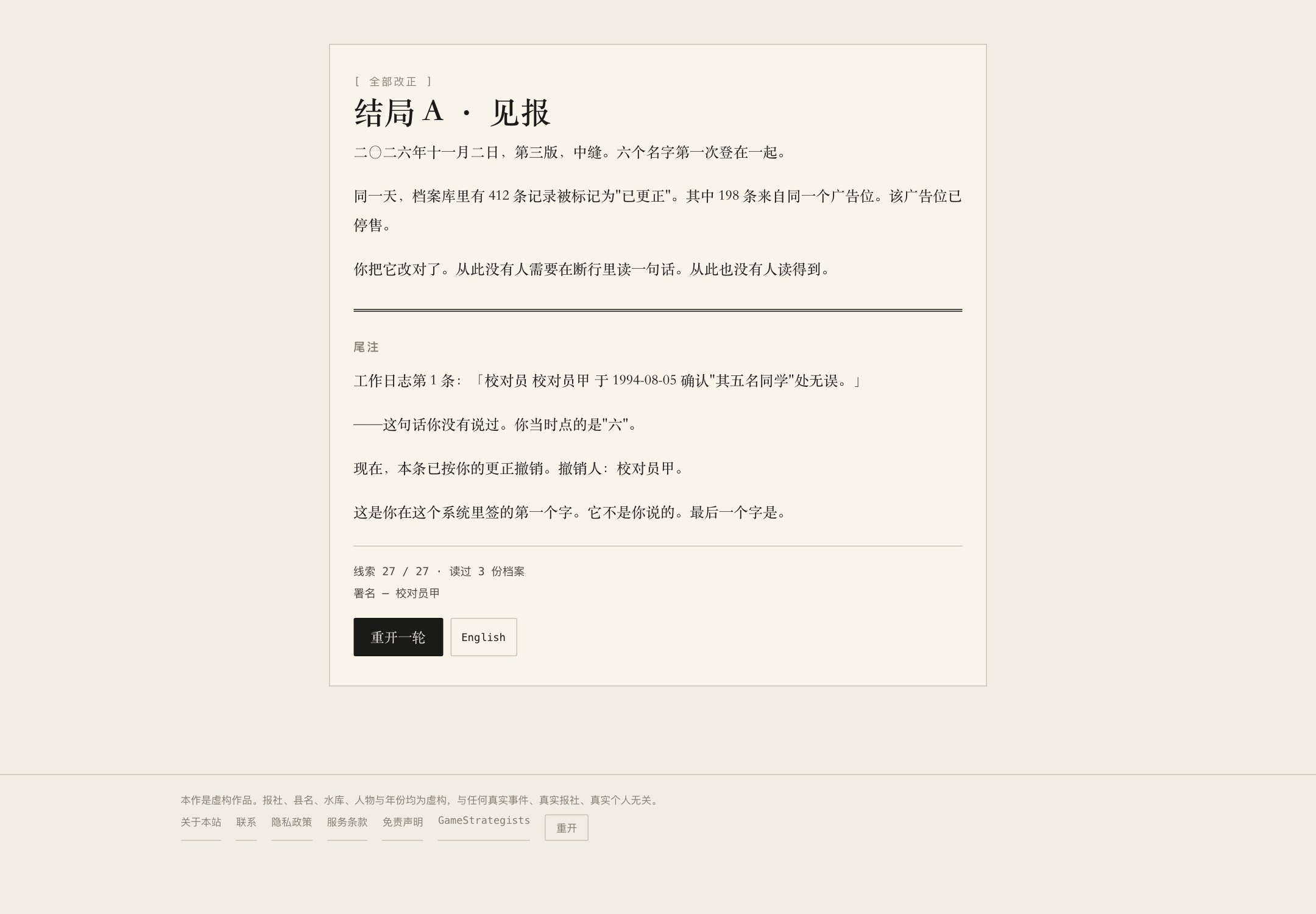
ERRATA is a newspaper-proofreading ARG. A classified ad offers remote work on the Lánchéng Evening News digitisation project: paid by the day, with one requirement — fix only typos, never the content. The system gives you an account and starts you on August 1994.
After two days you notice some “typos” will not go away: not OCR mistakes, but type that was physically swapped. The replacement characters look similar, the sentence still reads, only the meaning has changed. They appear only in obituaries, gutter classifieds and readers’ letters.
Connect the corrections and they point to a drowning at Qingshan Reservoir on 17 July 1994: six children went in, the newspaper printed five.
Three classifieds each break a line where nobody would break one; the last characters read together point at the composing room. Four ads are indented 0, 2, 1, 3 — page and column. After the metal type room closed, the same ad gains a full stop: one body of type, one slot.
None of this is invented. In 1949 underground couriers hid messages in characters that should not have been wrong, and compositors on the North-China Herald read a dead-drop out of classified line-breaks.
So the puzzles do not test vocabulary. They test whether you will read a meaningless room-to-let ad twice, character by character.
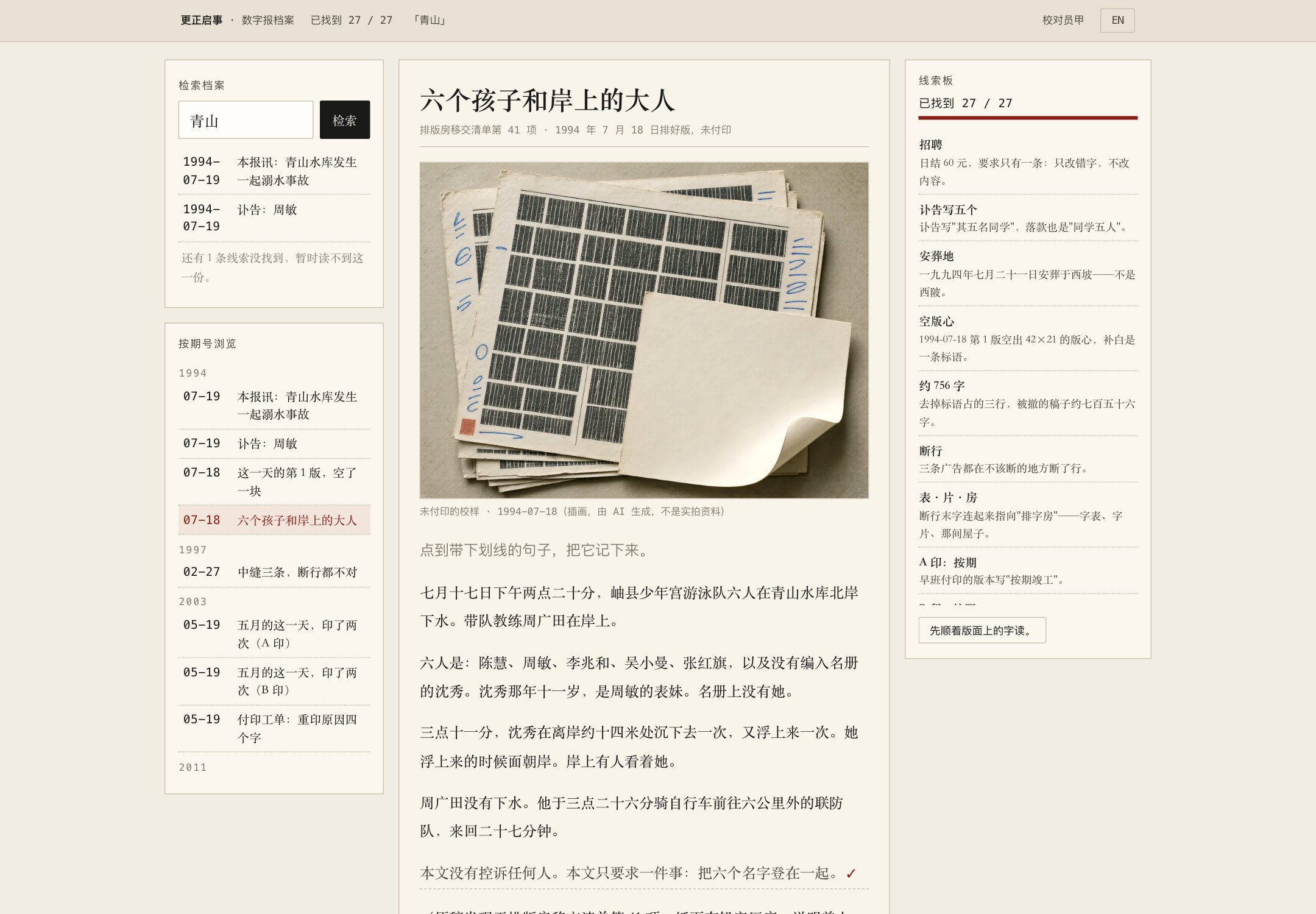
Your proofing list has 412 items. They are not random OCR noise: they are thirty years of work by a typesetter who could touch every piece of lead type but no headline. He split an unpublished article into hundreds of “typos” and hid them in obituaries and gutter ads nobody read.
The gutter line “Room for rent, south-facing, no cats” ran every 47 days from 1994-08-02 until its 198th appearance on 2019-12-08, and never again.
The suppressed story was set on 18 July 1994 and never printed. It waits on the last screen for a signature.
There are two endings: fix it through, or leave one item where it is. They are not “good” and “bad”; they are your last verdict on this newspaper.
The name you enter at the start stays in the system and appears in the byline. An erratum must be signed — industry practice, and this game’s way of handing the responsibility back to you.
There is no horror imagery. It is closer to a quiet, long proofreading session — until you realise you are being proofread too.
The newspaper, county, reservoir, characters, years and every page are fictional and unrelated to any real event, newsroom or person. Every screen in the game carries this notice.
The subject involves a fictional case in which a child drowned. It is handled through archives and layout, not horror or gore. If that subject is not for you, skipping this game is entirely reasonable.
All newspaper text, obituaries, ads and letters are original; no real newspaper pages or articles are used.
14 records and the search index live in errata/src/data/archive.js; the 27 clues in errata/src/data/clues.js; the 412 ledger and the 47-day cycle in errata/src/data/ledger.js; the two endings in errata/src/data/endings.js.
Run `npm run audit` in the errata repo: 0 blocking items, 0 warnings. It also asserts that every clue can be clicked in the text and every record can be found by its own keyword.
The render gate `node scripts/check-render.mjs` drives a real browser through a full playthrough in both languages: 27/27 clues, manuscript unlocked, ending reached, zero page errors.
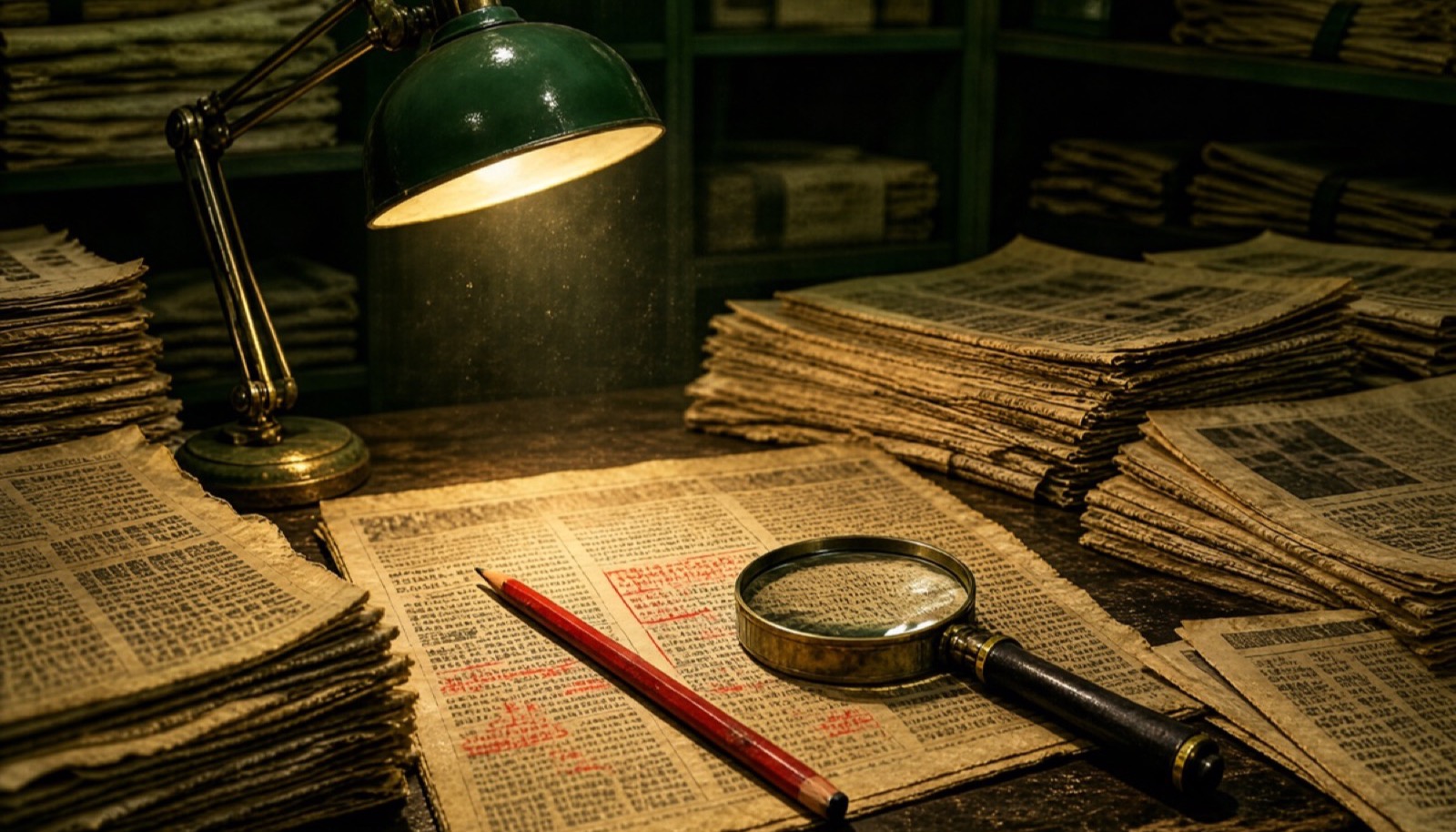
The four screenshots were captured from the live game on 20 October 2026; the hero image is a generated illustration and labelled as such.
Do I need an account or payment?
No. Enter a signature and start; free, and no real details are requested.
What if I get stuck?
Try another search word; after two empty searches the desk offers one that exists. You can also browse every issue by year.
What am I looking for?
Things that do not add up: a count, a date, a broken line, an extra full stop. Clicking the sentence records it on the clue board — no note-taking.
How much is there?
Six periods, 14 records, 27 clues, 412 ledger items, 2 endings.
How long?
About 90–150 minutes. Progress is saved on your device, so you can spread it over several sittings.
Any horror?
No. But the story involves a fictional drowning of a child, so please take care.
Start proofing — Runs on its own subdomain · progress saved on this device