Abyss Messenger is our only real-time 3D first-party ARG: journalist Lin Xi lands on a coral island in the deep Pacific and delivers messages for five people. 5 regions, 5 deliveries, 4 puzzles, 3 endings, about 20–40 minutes, straight in the browser.
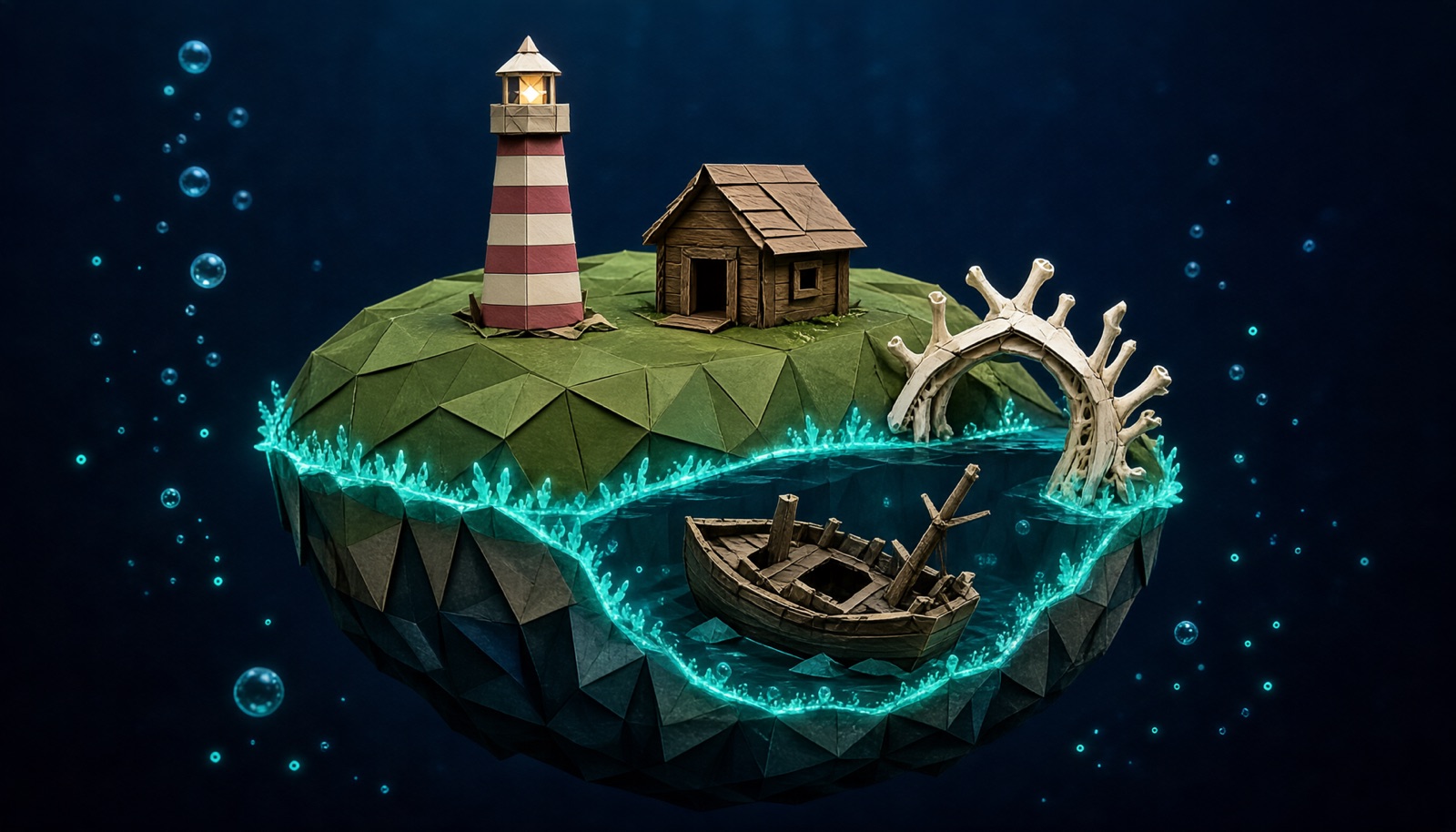
Illustration (AI-generated), not a game screenshot
Investigative journalist Lin Xi sails to a mysterious coral island deep in the Pacific to deliver messages for five people. 5 regions, 5 deliveries, 4 puzzles, 12 collectible echoes and 4 endings, real-time 3D in the browser; the main line is a little over twenty minutes, and collecting all twelve echoes takes about 40–60.
Regions:5
Deliveries:5
Puzzles:4
Endings:4 (one requires all echoes)
Echo fragments:12, picked up by walking near them
Length:about 25–50 minutes
Controls:WASD move · E interact · Shift sprint · drag to look
Graphics:Real-time 3D in the browser (WebGL)
Platform:Browser, nothing to install
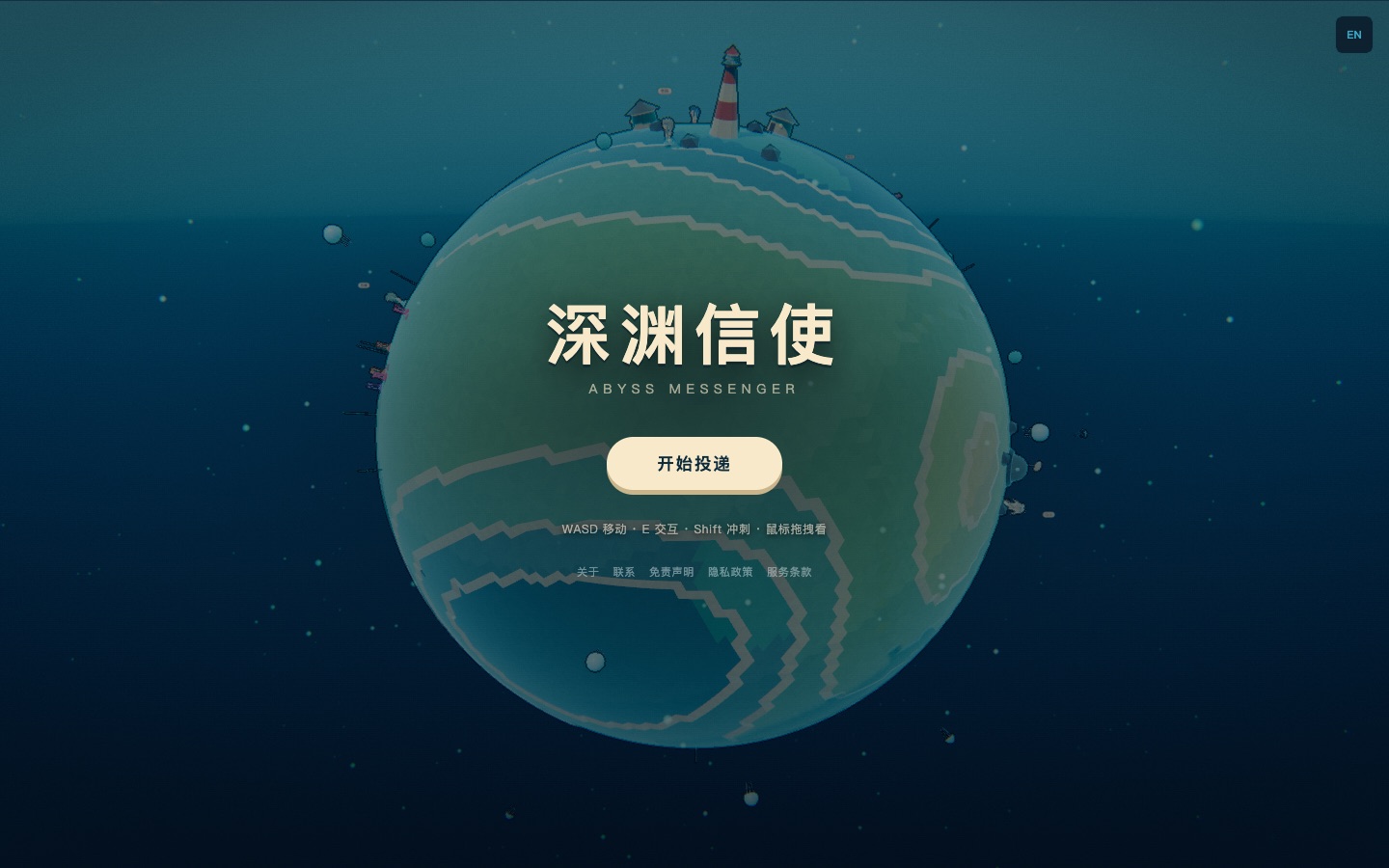
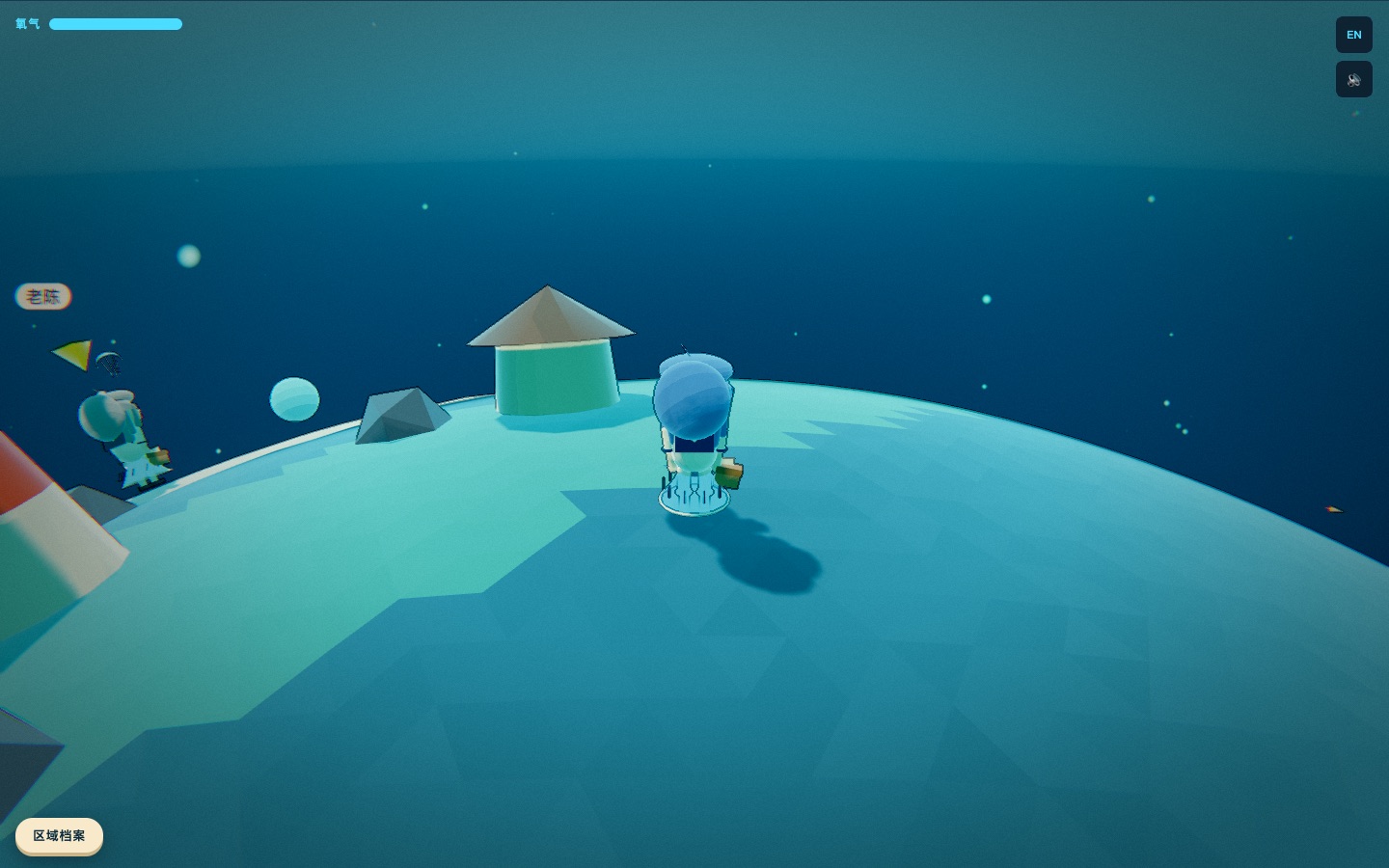
The title screen: the island is a small planet you can walk on, with the control hints under the buttonIn-game: the oxygen bar at top left, an NPC name tag on the left, and the region atlas button at bottom left
What it is
Journalist Lin Xi lands on a coral island deep in the Pacific. It is small: a lighthouse and jetty, a reef to the south, a sunken-ship bay, a bone temple, and an abyss laboratory. Your job is simple — hand five things to the next person in line.
But before anyone passes you the next letter, they check whether you actually understood the last one: how many seconds apart is the tide now? How much brighter did the seafloor glow over three months? Someone recalculated that “two hundred years per turn” line — to what? And the frequency Ming Yue mentioned — how many hertz?
The island is built as a low-poly paper-craft little planet: the horizon curves, walking one way brings you back, and bioluminescence drifts on the surface. The dread is not a monster but a sonar outline that shifts a few metres every ten minutes — curved, like a spine.
It is the only true 3D game among ours, and the source of the “island heartbeat at 52.9 Hz” referenced across the frequency network.
How to play: an island you walk on
WASD to move, Shift to sprint, E to talk, drag the mouse to turn the camera;
The oxygen bar sits top left: one tank is roughly enough to sprint the whole main line (about 100 points), so sprinting a shortcut competes with picking up oxygen bubbles on the way;
Hitting zero does not sweep you away: you enter a critical state first — speed drops to 45% and you get ten seconds to find a bubble;
The Region Atlas button at bottom left opens five hand-drawn region plates (labelled in-game as illustration, not screenshots) so you can see where you have been;
The five deliveries are one chain: Old Chen → Su Qing → Ah Hai → Ming Yue → K; the last has no recipient and ends the run;
Progress saves locally in the browser (a save layer added on 2026-10-18: backgrounding the tab no longer wipes all five quests); Chinese by default with English available.
Five people and five letters
Each delivery unlocks the next conversation; the five accounts quote each other, and the last one hands you the complete truth.
Old Chen · Lighthouse and jetty: has kept a tide table half his life; his first gift to you is that log;
Su Qing · southern reef: runs the fluorescence counts, and wants the tide period said correctly first;
Ah Hai · Sunken-ship bay: the fisherman who saw something “curved, and moving” down there; he holds a page of the family chronicle;
Ming Yue · Bone temple: keeps an arch of vertebrae and its rubbings, and knows the recalculated cycle length;
K · Abyss laboratory: stayed behind three years ago, alone; the sonar scans, carbon-14 dates and brainwave charts were all produced here — he wants the frequency.
Four puzzles: say the number, do not hunt for a key
All four are keyword answers inside dialogue; you have to lift the number out of the previous stop’s text, which the game will not highlight for you.
Being stuck is not punished: on the third wrong attempt of the same question the game simply gives you the answer — the developer note says an hour of being stuck is not difficulty design.
First (Su Qing): how many seconds apart is the tide now — the answer is in Old Chen’s tide log;
Second (Ah Hai): how much brighter the seafloor glow over three months — Su Qing’s data gives a multiple;
Third (Ming Yue): the chronicle says two hundred years per turn, but someone found that imprecise — how many years;
Fourth (K): Ming Yue must have mentioned a frequency — how many hertz.
The last resonance question: 34.2
K says: this island is 52.9, under Lan City is 18.7. What the world hears is the difference between them. Give that number back.
So the answer is neither 52.9 nor 18.7 but their difference — 34.2 Hz. This is also where the shared frequency line is named outright: 18.7 Hz belongs to Project Tide in Tide Sound Archives, and 52.9 Hz is this island’s heartbeat.
Only after this does the hidden ending (“Answer it”) appear; collect all twelve echoes and the choice screen gains a fourth.
Twelve echoes: a past you can pick up
The five deliveries only cover what is happening now. Twelve unsigned fragments are scattered across the island: a sounding lead, a burnt nameplate, Su Qing’s first sample log, a tagged fish that stopped migrating, a child’s drawing on the back of a chronicle, a coin minted after the wreck, a thirteenth rib, a caretaker roll, K’s EEG chart, coral of two ages, a 1978 hand-drawn sonar chart, and a letter addressed to “the next courier”.
They are not quests: walk close to the glimmer under the sea and it is yours (there is no E key on a phone). Collected fragments go into the Echo log, grouped by region, each with an object plate. Every one agrees with the main line’s numbers — four seconds, four hundred percent, two hundred and twenty-two years, 52.9 hertz — and fills in the half the main line leaves out.
Collect all twelve and the ending gains a fourth choice.
Four endings
The four come from the final choice and none is marked correct: publish, bury, answer — and, once all twelve echoes are collected, replying together.
You sent the frequency out: on the seventh day after publication every tide gauge on the Pacific coast records the same 0.4-second rise at the same moment; nobody announces a discovery, but every port starts leaving its lights on at night. You wrote the truth, and the price is that nobody can pretend not to have heard;
You burned the coordinates: K’s coordinates, Su Qing’s charts, Ah Hai’s chronicle page and Ming Yue’s rubbing all go back under. The lighthouse still turns, Old Chen still logs his tides, four seconds apart. Nobody knows what is under their feet — perhaps a kindness, except that now you count the ground once every time you dock;
You transmitted 34.2: you send the difference straight back. For three seconds the whole island goes quiet, even the surf stops; then the coral starts growing fast enough to see. Ming Yue smiles under the bone arch: “It’s awake. It was only waiting for a voice like its own.” Beneath you, the ribs move for the first time;
Twelve echoes, one frequency: six seconds of a sounding lead, a fish that would not leave, growth rings in coral, struck-through names on a caretaker roll, K’s seventh minute and a letter addressed to the next courier — you send them out together. Three seconds later it answers with something longer: not 34.2, but its own heartbeat, slow and steady, like counting. This time it speaks first.
Graphics and performance
The game is real-time 3D in the browser (WebGL) with no install or plugin; the low-poly paper look is light on the GPU, though it does need one.
If it stutters on an older laptop with integrated graphics, a smaller window usually smooths it out; mobile browsers will run it, but the controls are written for a keyboard, so keyboard and mouse are recommended.
The island on the title screen is the same one you walk: from outside it is a small sphere, and the horizon only bends once you are on it.
Where players get stuck
Talk to Old Chen first — walking straight into the lighthouse skips the opening delivery;
All four answers live in the previous stop’s dialogue, not on objects in the scene;
Oxygen at zero is not a fail state; find a bubble during the critical window;
The resonance question wants the difference (34.2), not either raw frequency;
The Region Atlas holds hand-drawn plates — illustration, not a screenshot — so do not use them as a route map.
Why it is worth half an hour
It is our shortest game and the only one where you have to move through three-dimensional space: the delivery chain gives you a reason to cross the whole island instead of pressing five buttons in a menu.
The horror is restrained: nothing jumps out at you. The scariest line is simply “watch it for ten minutes and you can see it moving”.
All four endings are short but leave something behind: a 0.4-second rise, the habit of counting the ground, ribs that move for the first time, and — in the fourth — a reply that arrives before you ask for one.
If you want one brief taste, start here. If you want the frequency network explained first, start with Tide Sound Archives.
How it sits in the shared universe
52.9 Hz is this island’s heartbeat; 18.7 Hz belongs to Project Tide in Tide Sound Archives; 18.98 Hz is the sanatorium in Eye of the Abyss; the bell in The Sunken City and the hum under Rust River sit on the same table.
When ending D of Tide Sound Archives mentions “the 52.9 Hz island heartbeat”, it is talking about this game.
No required order, and no story prerequisites.
Recent changes
2026-10-19: twelve echo fragments and a fourth ending; echoes and delivery progress share one save (v2, old saves get an empty list); the twelve object plates were generated with SenseNova;
2026-10-18: a save layer was added, so backgrounding the tab no longer wipes all five quests; three defects fixed — a jump that froze the character, an arm bending backwards, and a background reduced to noise — each with a gate that turns red if it returns; share images standardised at 1200×630;
2026-10-17: trust-page dates follow real body revisions; the sitemap stopped claiming unsourced lastmod values.
How the numbers on this page are checked
Five regions come from the plates in regions.js, five deliveries from quests.js, four puzzles from puzzles.js, and four endings plus twelve echoes from puzzles.js and echoes.js; the five characters come from npcs.js. Each echo’s sphere coordinates live in echoes.js and the 1.7-unit pickup radius in Echo.js.
The oxygen figures — roughly 100 points per tank, 45% speed and a ten-second grace in the critical state — are implemented in Oxygen.js. “A little over twenty minutes” is a measured single playthrough of the main line; this page states it as about 20–40 minutes.
Both screenshots were captured from the running WebGL game on 2026-10-19. The hero image is an AI-generated illustration, not a game screenshot, labelled at the top of the page. If a number here disagrees with the game, the game is right; tell us in the changelog.
Who it is for
For players curious about walking through a 3D puzzle without committing seven or eight hours, and for readers of the other games who want the other end of the frequency table.
Not for players who would rather not move a character with a keyboard; phones work, but the controls assume one.
FAQ
Do I need an account or payment? No. It runs in the browser, free, with no account or in-app purchases.
Any plugins? No. It is real-time 3D in the browser (WebGL); use a current Chrome, Edge or Firefox.
How long is it? About 25–40 minutes for the main line, 40–60 with all twelve echoes; seeing all four endings needs a restart.
Where is progress saved? Locally in the browser. Backgrounding or refreshing continues the run; it does not sync across devices, and clearing site data restarts.
Am I punished for wrong answers? No. On the third miss of the same question the game gives you the answer.
Can I switch to English? Yes, on the title screen and in game; dialogue and endings are translated.
What if it will not open or runs badly? Use a current browser and check your graphics driver; a smaller window usually helps. If it still fails, email contact@gamestrategists.com with your device and browser version.
Start delivering — Runs on its own subdomain · progress saved locally · real-time 3D in the browser